ASGC®
BWMS installation: from mechanical works to full commissioning
A complete scope covering piping, electrical works, cable trays, control and automation, vessel integration, testing and commissioning.
Mechanical & electrical works
The scope starts with mechanical and piping works: BWMS ballast piping, filters and treatment units (UV reactors or electrolysis units by system type), valves and actuators, flange and pipe support fabrication, drain/vent/backwash lines — with pressure and leakage testing and route verification against approved P&IDs.
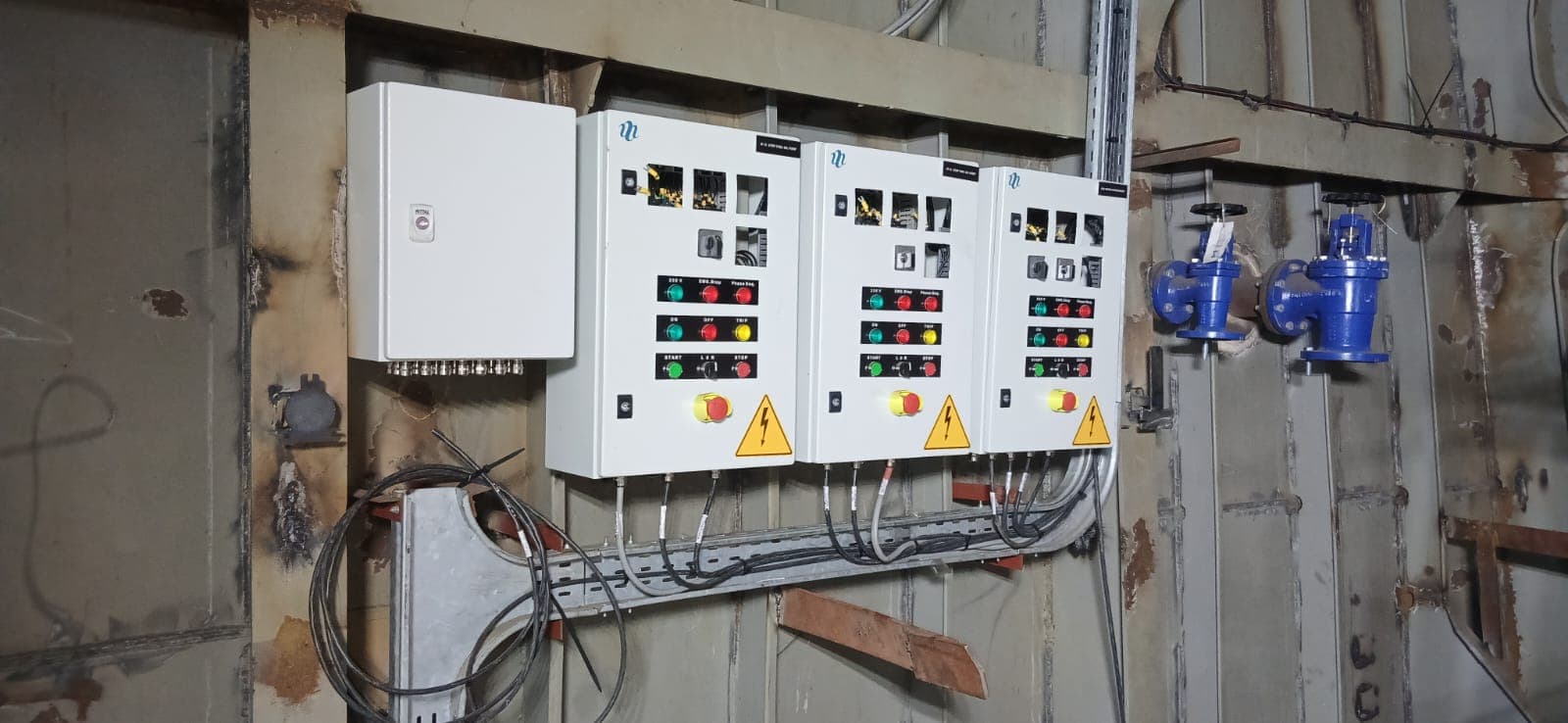
Electrical works cover power and control panel installation; power, control and signal cabling; glands and junction boxes; earthing and bonding; connection of pumps, motors, valves, actuators and instruments; in-panel termination; and insulation-resistance and continuity testing.
Cable routing, control & automation
Cable tray routes are designed and installed with their supports and ladders, segregating power from control and signal cables where required, with cable pulling, identification, dressing, securing and tray earthing.
On the control side, the work interfaces ballast pump running feedback, valve open/close commands and position feedback, flow and pressure signals, and alarm/status signals over digital and analog I/O and communication links — through to integration with the vessel's IAS.
Testing & commissioning
After installation, a complete test package follows: cable continuity, insulation resistance, earth continuity, functional and I/O tests, valve operation, sensor verification, pump interlocks, alarm and trip tests, automatic operation, actual ballast/de-ballast operations, and communication interface verification.
The system is then commissioned under real operating conditions to verify performance, safety, reliability and correct integration — handed over as a complete operational system.