ASGC®
Ballast Water Management Systems (BWMS): what they are and how they work
A marine treatment system that treats ballast water before discharge to prevent transferring aquatic organisms between regions — its components, technologies and operation.
What is a BWMS?
A Ballast Water Management System (BWMS) is a marine treatment system installed on vessels to treat ballast water before it is discharged overboard. Its main purpose is to prevent the transfer of aquatic organisms, microorganisms and marine species from one geographical location to another, reducing the environmental impact of untreated ballast water discharge.
The BWMS operates as an integrated part of the vessel's ballast system — hydraulically, electrically and functionally tied to the ballast pumps, valves, piping, control system and monitoring system.
Main components
Components vary by manufacturer and treatment technology, but a typical system includes: the main treatment unit (UV, electrolysis/electrochlorination, or filtration combined with either), an automatic self-cleaning filter that removes suspended solids and sediments before treatment (backwashing on differential pressure), and a UV reactor that inactivates microorganisms in UV-based systems.
In electrochemical systems, seawater is processed through an electrolytic cell to generate active disinfecting substances. Such systems typically include electrolytic cells, a rectifier, TRO monitoring, a neutralization unit and instrumentation.
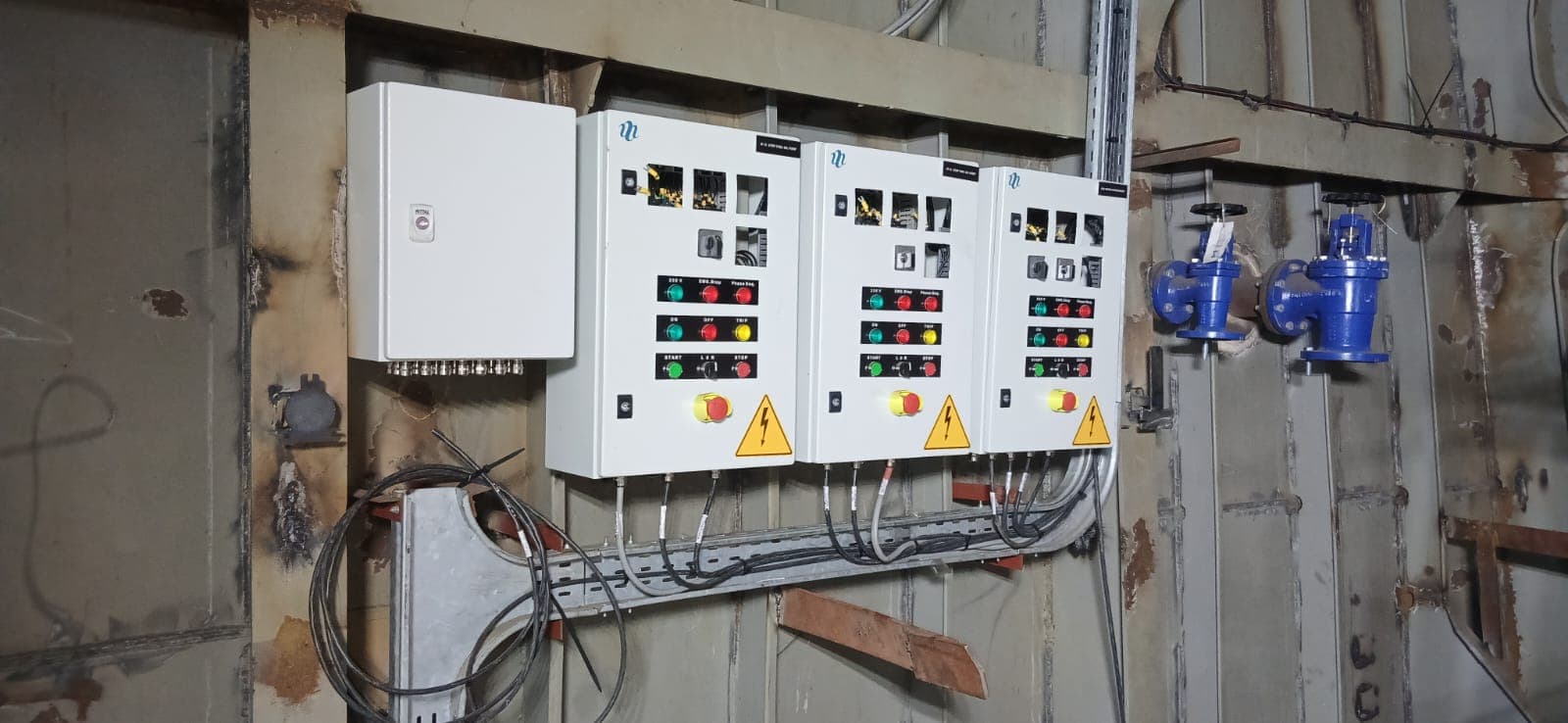
The control panel / PLC is responsible for complete operation, monitoring and protection — processing signals such as flow, pressure, temperature, valve position, pump status, filter differential pressure, TRO, UV intensity and system alarms, supported by flow meters, pressure, temperature, level and conductivity sensors.
How it operates
When a ballast operation starts, the control system first verifies operating conditions: ballast pump running, sufficient flow, correct valve positions, no blocking alarms, and treatment unit and sensor readiness. Water is then routed through treatment — a typical UV arrangement being: ballast pump → filter → UV reactor → ballast tank.
During de-ballasting, water may pass back through treatment before overboard discharge, depending on the system design and approved operating configuration.
The most important aspect of installation is integration with existing vessel systems: a BWMS never operates alone. It must interface with ballast pumps and valves, the Integrated Automation System (IAS), the Power Management System (PMS) where required, and alarm & monitoring — over digital/analog signals or communication interfaces.